-
One Gospel, Many Languages
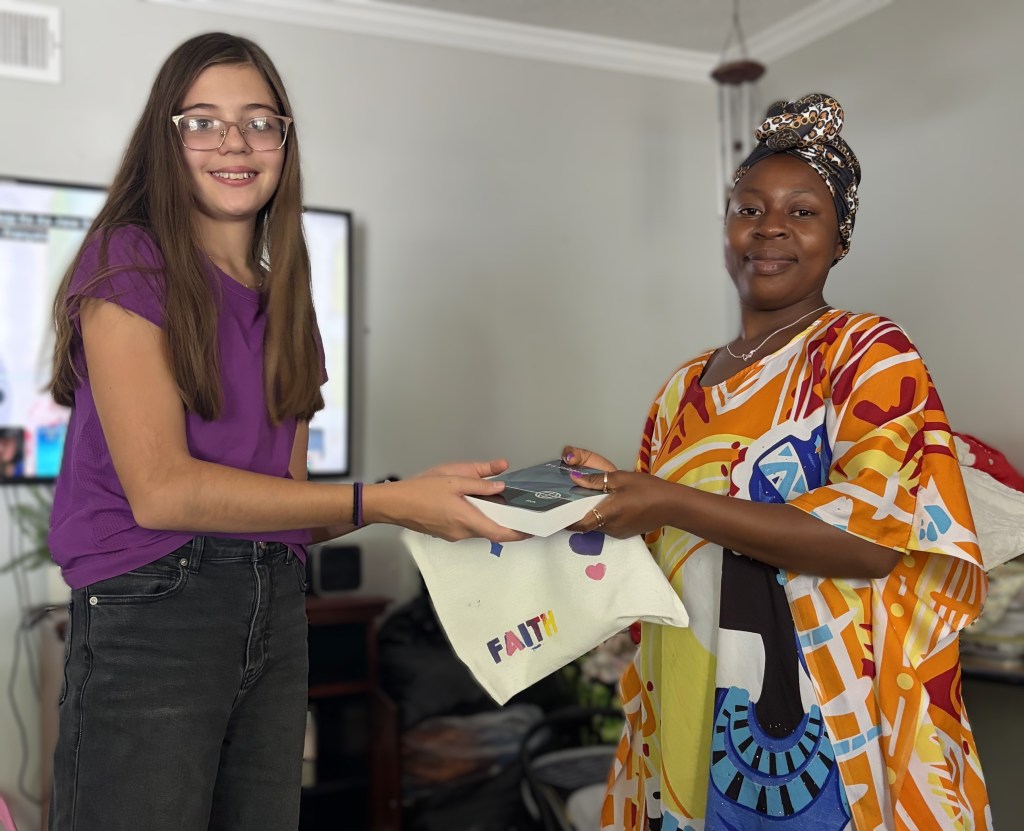
Today I visited a family from the Central African Republic, also known as CAR. They live in Jonesboro which is about 30 minutes from Clarkston. I was going there to deliver a French Bible to someone named Memory. But when we arrived at her apartment, no one was home. However, her parents, who live in another apartment nearby, were home. When they saw us knocking on her door, they invited us into their apartment to wait for Memory.
We talked for a long time with Memory’s mom and dad. They have been in the US for 19 months and the dad speaks some English. When Memory was a little girl, they had to leave CAR as refugees and they moved to a refugee camp called Gado in Cameroon. They lived there for over 20 years and they didn’t like it very much. They said the life there was very hard.
When we were talking to her dad, he got excited about Bibles. He showed me his collection of Bibles. He has a big English Bible and a bigger French Bible. He also had a small Bible in a language called Sango, which is the main language in CAR. Then he had a smaller Bible in a language called Kaba, which is his tribe. There are a lot of tribes in CAR and they all speak different languages. He tried teaching me some words in all the different languages. He was really proud of all his Bibles and he said he likes to read his Bibles in different languages because it helps him to understand the Bible even more.
When Memory arrived, she was glad to see us. She had her little daughter with her who was born in the US. We gave her the French Bible. She said it was the first Bible she ever had of her own in her whole life. We also brought her some food, dishes, and some toys for her little girl. She was very happy and grateful for those things. When we were leaving, she and her parents were waving and still thanking us in all their languages even as we drove away.
-
Remembering Our Roots
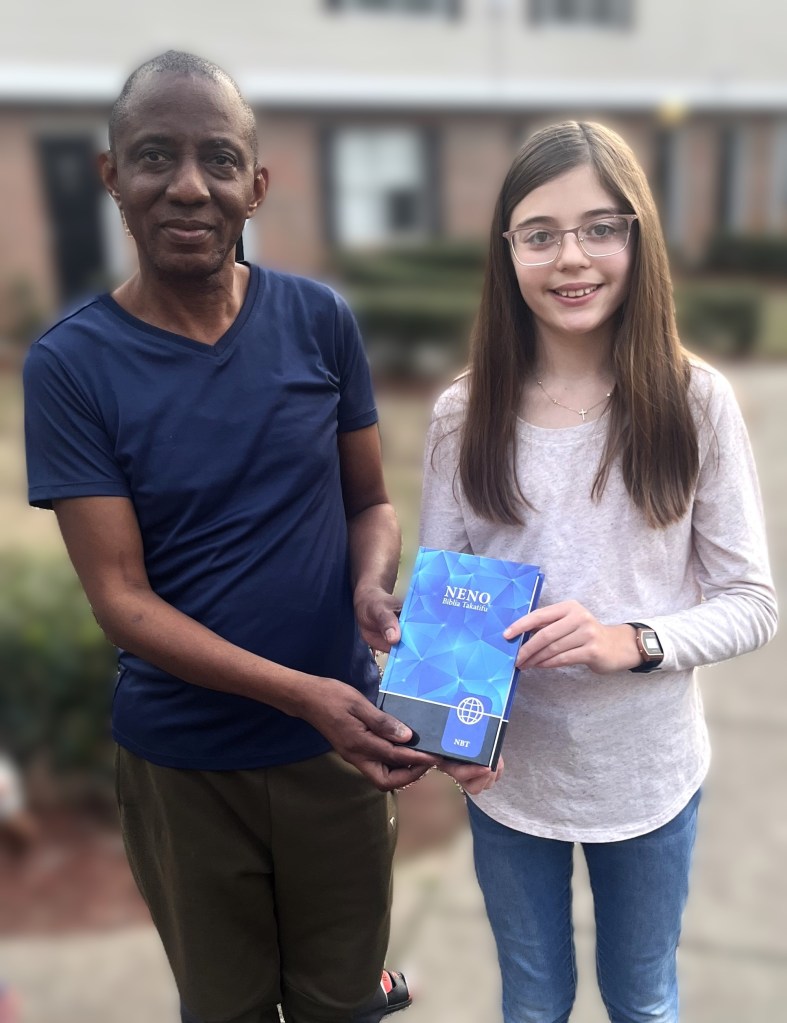
A refugee family that recently came from Burundi needed a Bible. They speak Swahili and so they asked me to bring them a Swahili Bible for their whole family.
The parents were really glad to get it. The father was worried because he said his children were learning things in school that he didn’t like. He said the favorite foods of his kids are now hamburgers and pizza – American food! He was worried that his kids were going to forget about their roots, like their food and their language, things like culture. He said they were forgetting about where they came from. And he was also worried that his kids were learning about bad ideas and bad behavior in the school.
But when I presented the Swahili Bible to the family, even his children seemed very excited to see the Bible. They were reading from it in Swahili.
I think that even though the children will grow up in a different culture from their parents and learn to eat different foods and wear different clothes, they still have one big thing in common – their faith in Jesus.
I saw that the parents were trying to pass on something to their children so that they don’t forget where they come from. The Bible does that for all of us!
-
About Shoes and Bibles
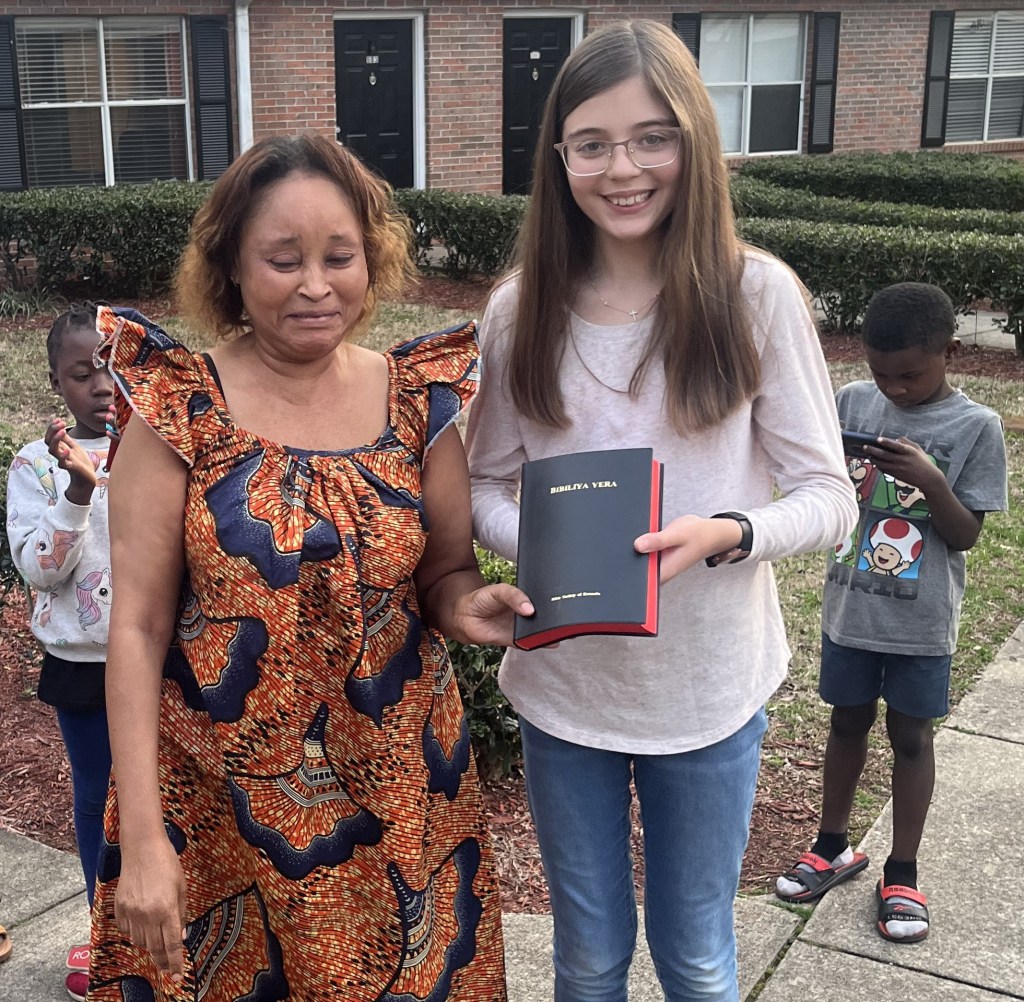
I gave a Kinyarwanda Bible to a refugee family today. The dad was from Burundi and the mom was from Rwanda. They have four children. About five months ago they came from a refugee camp in Burundi where all their kids were born.
They said they didn’t have a lot of stuff in the refugee camp. So, we also brought them some clothes and shoes. And I could tell the kids weren’t really used to wearing shoes. They kept playing with their shoes the whole time we were there. They had on mismatched pairs, sometimes two left feet or two right feet. One kid had the right foot shoe on his left foot and the other kid had the left foot shoe on his right foot! I could tell they weren’t used to wearing shoes, and it was a new thing for them to have lots of shoes.
In the same way, they were so happy about getting a Bible in their language. We are used to having Bibles everywhere. When we go to church, there are lots of Bibles around every chair or pew. But for them, Bibles are rare and they treasure them. They really liked their new shoes and they really liked their Kinyarwanda Bible.
-
My First House Church
Today I visited a family from the Central African Republic. The languages they speak are Songo and French. The family hosts a house church. This was the first time I ever went to a house church! A house church is when a few families meet together in a place like a house or an apartment. This family had a small apartment that everyone squeezed into. They did everything you normally do in church except they don’t have a church building that they meet in. They said that this way it’s easier for the people to get to a church where people can speak a language they know.
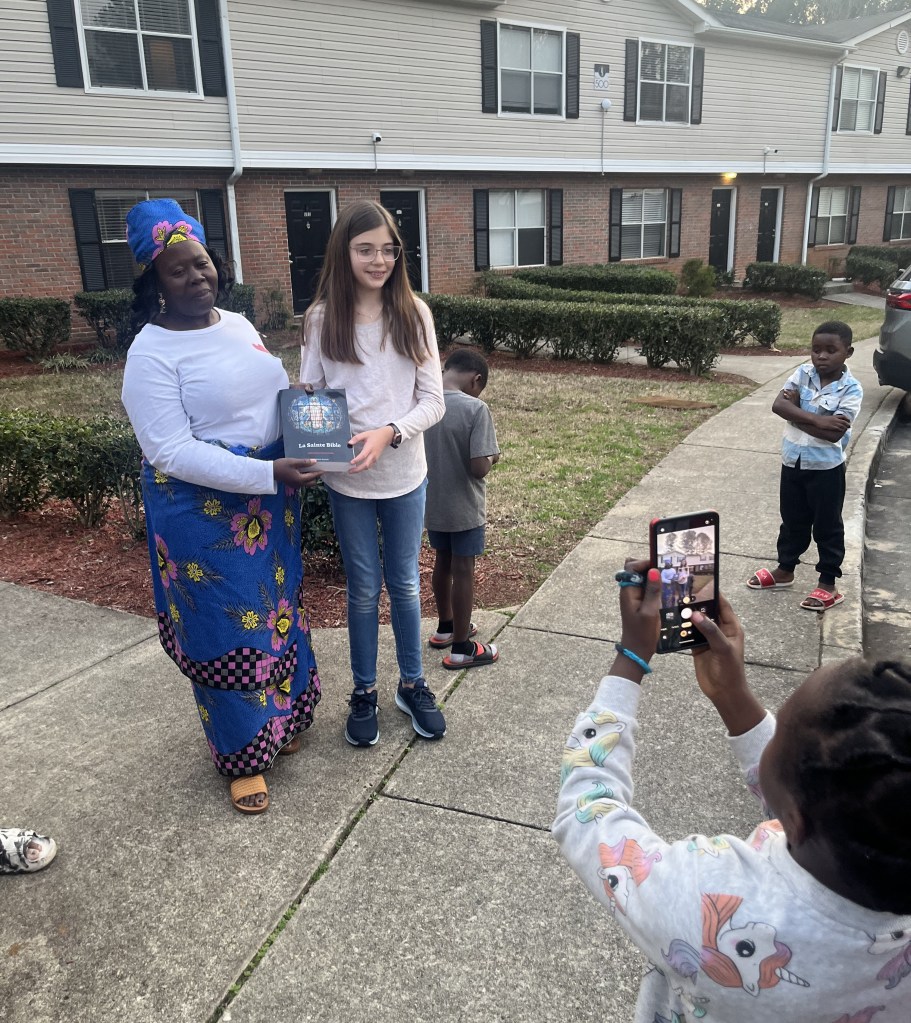
There were people from three different countries and they were speaking in six different languages! We sang some songs in French, Songo, Swahili, English, Kinyarwanda, and Kibembe. My dad was very surprised when they asked him to preach and his sermon had to get interpreted from English to Swahili to French. They also did an offering and they had a message for the youth. After the service, I was able to present a French Bible to the family. They were very grateful to get a Bible in a language they can understand. It was like a ceremony and everyone wanted to take a picture with the new Bible!
-
Ready for Anything!
Usually, when I finish delivering a Bible to a family, I go to a little café with my dad so that I can write some notes for my next blog story. The best café to go to is called Halal Pizza in Clarkston. It is run by people from Somalia. I like to order chai (tea with milk, sugar, and ginger), maandazi (fried dough), fried fish (tilapia I think), lentil stew, and malawah (bread).
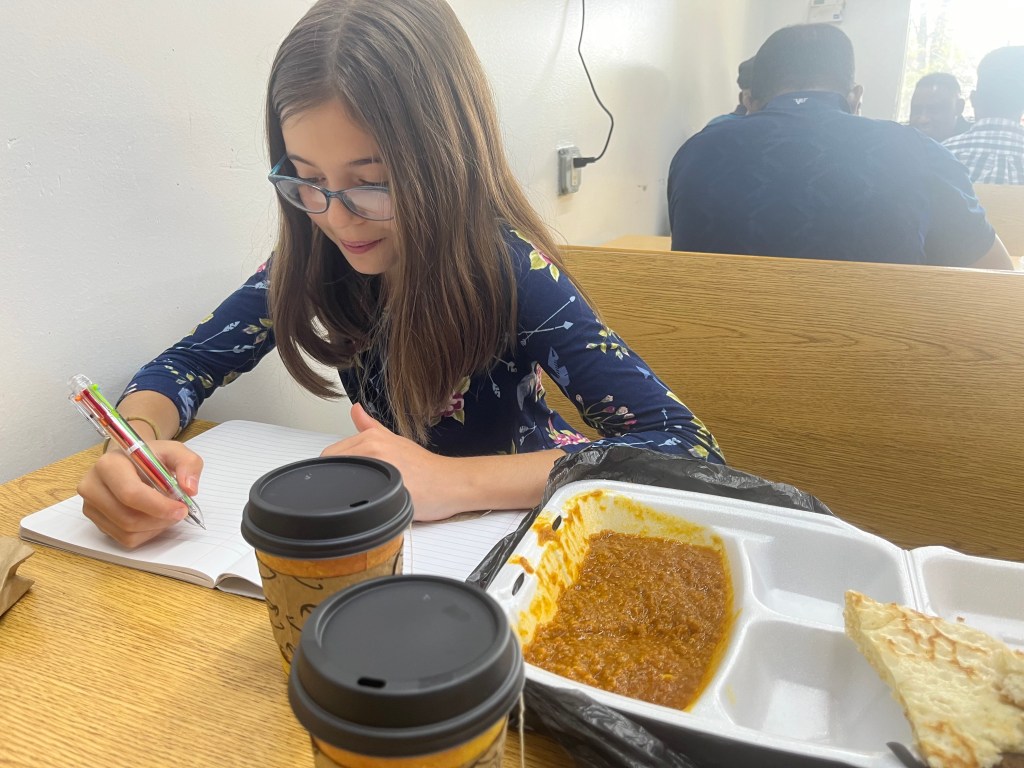
A lot of people go there, but mostly Somali men. It’s always very busy. The men like to watch soccer on the tvs or sit and talk while they drink tea. But that’s also one of the reasons we go there. I just sit there and write my blogs and sip on some chai while my dad tries to talk about soccer with the guys. He doesn’t really know anything about soccer but they like to teach him. He always hopes they will ask him about the gospel. I hope that one day they will ask me for a Bible in their language. I have a couple of them and I’ll be ready!
-
A Big Test
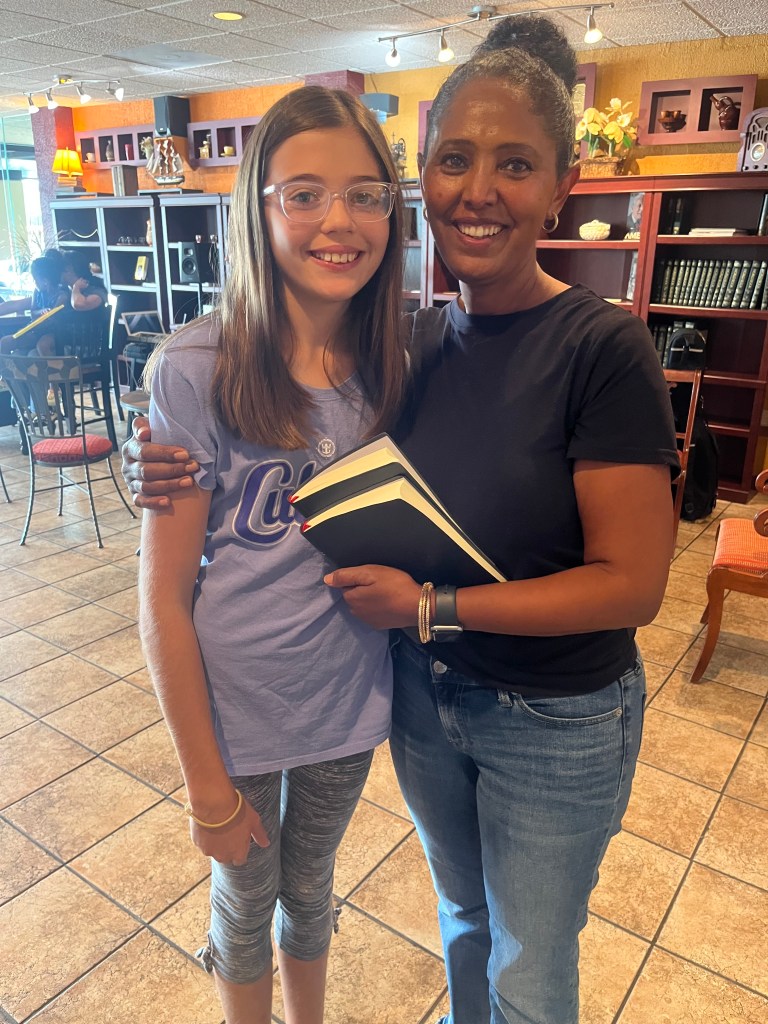
Today I visited Mrs. Selam’s coffee shop again. She was planning a trip to Ethiopia and she wanted to bring some Tigrinya language Bibles with her. She wanted to test the translation out to see if it was good and to see if the people could understand it. She said that not many pastors have them over there, but they really want them. They use Bibles in other languages, like Amharic, which doesn’t really help the people who mainly speak Tigrinya. She said she needs to test these out to see if the translation matches the language that the people speak everyday. If it does, it will be great! Then she has a source (me) for more of them! I’ve never really heard about testing out Bible translations, but I can see why it would be important. People need to have God’s Word in the language they speak so that they can understand it very well.
Mrs. Selam asked us to pray for her trip and for a good chance to test out the translation. I gave her the two copies I had, and she was very thankful to be able to share them. I’m looking forward to when she returns so that I can see if the translations were good.
-
It’s the Simple Things
Today I visited a refugee family from the DRC. Therese is a single mom with six kids. Her husband recently left her, so my dad was asked to visit and bring her some food and other things. We asked if she had a Bible and we were told that she didn’t have one in Swahili. We didn’t think she could speak English but we were really surprised when we went there and she greeted us in English and was talking constantly in English. She said she was trying hard to learn English so that she could get a good job.
We brought a lot of food for her – cabbage, tomatoes, squash, green peppers, sweet potatoes, onions, rice, beans, peanut butter – and boxes of used clothing for her and her kids. She was so happy! Then we gave her the Swahili Bible and when we asked to take a picture with her, she got really excited and wanted to change into her best clothes! It was good to see her get so excited about simple things like used clothes, cabbage, and a picture. I might take those things for granted. We said goodbye and as we drove away, we could hear her shouting “thank you!” through our open windows.

-
Coffee and a Little Courage
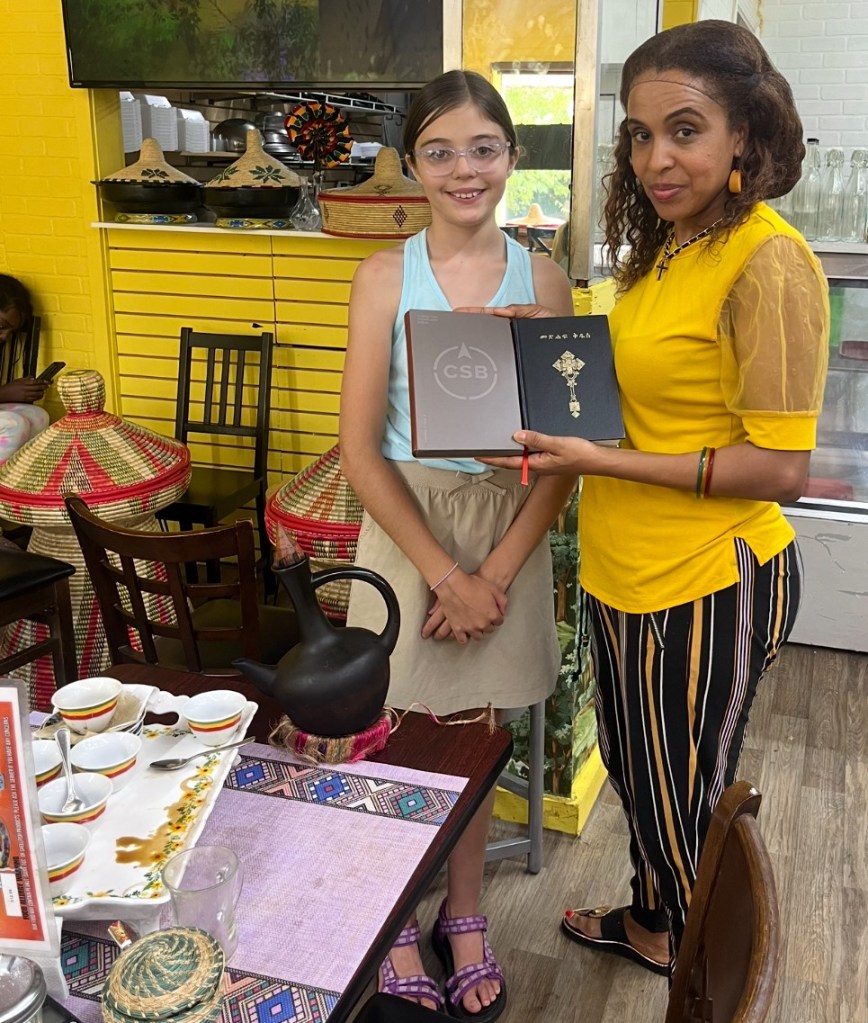
My dad likes to go to coffee shops and sometimes I go with him. One day, we went to a good one in Clarkston that is Ethiopian. Ms. Ayana serves traditional Ethiopian coffee ceremonies there, and it’s a lot of fun. She burns frankincense and everyone is invited to gather together and drink these little cups of coffee.
Now, Ms. Ayana knows that I don’t really like to drink coffee, so she adds a lot of sugar and milk for me, and it tastes pretty good! This time, after she served the coffee, I decided to see if she has a Bible in her language, so I got some courage and said, “Hey, do you ever read the Bible?”
She was kind of surprised and she said, “Yes, of course I do! The Bible is the most important thing!” She said she goes to the Orthodox church, and I found out she didn’t actually have a Bible in her own language, which is Amharic.
So, I was able to give her an Amharic Bible and she was very glad! Then she asked me for an English Bible so that she could give it to her daughter. After that, she asked me to bring a whole box of Bibles to her church to give to all the kids there too! All of that happened because I got the courage to ask her one little question about reading the Bible!
-
The Bread from Heaven
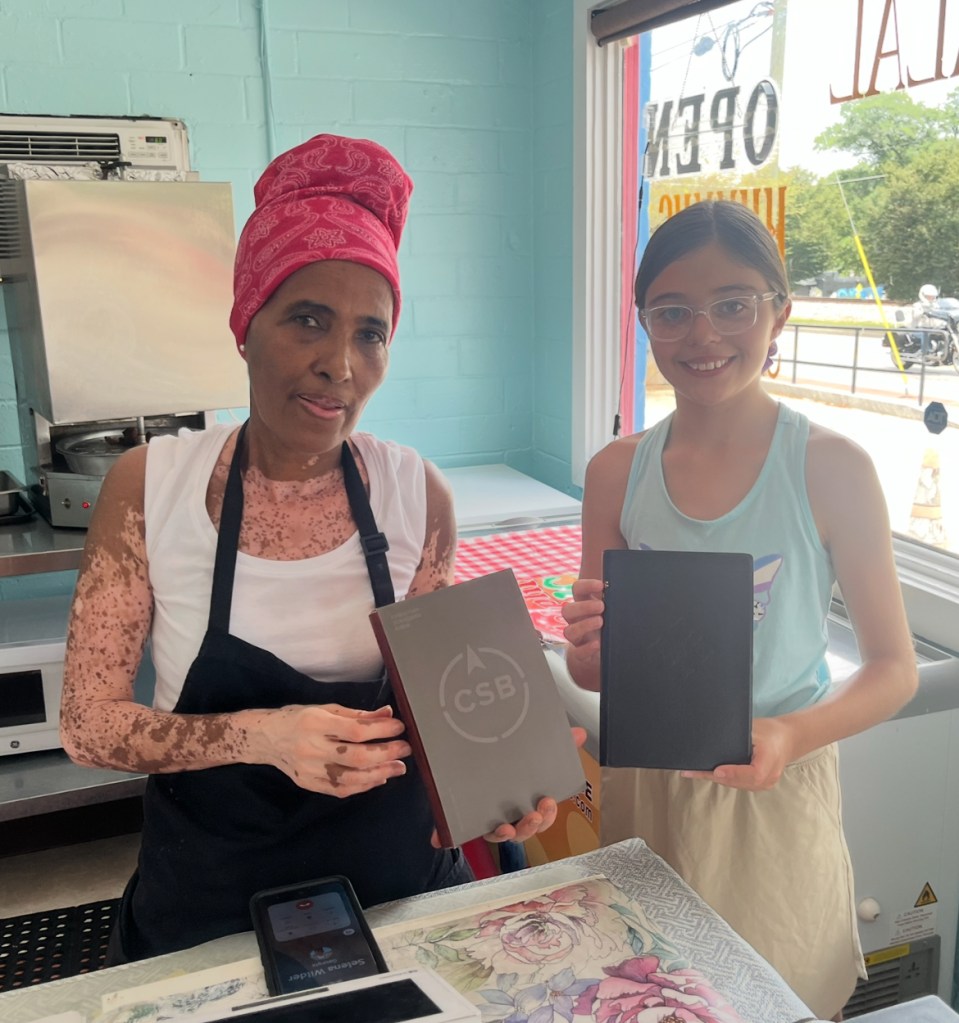
Today I visited Manna. She is from Eritrea and she speaks Tigrinya. She owns a restaurant in town that I like to go to, and she makes really good shawarma. It’s one of my favorite foods in Clarkston! This time I asked her if she needed a Bible in her language and she said yes. She asked for a Tigrinya Bible and also an English Bible because she speaks English too. She said she would keep the Bibles for herself unless someone came into her shop and needed them more. Then she would give them to those people.
When I gave her the Bibles, she asked if we could show her where her name is found in the Bible. My dad showed her Exodus 16 where it talks about God giving the Israelites manna when they were hungry. She was very happy to hear that. Then she asked about the difference between the Old and the New Testaments. So, we showed her in John 6 where Jesus says that He is the true manna from heaven, the bread of life, and whoever believes in Him will never be hungry or thirsty. She was so happy to hear about that!
Manna asked about a good Bible reading plan. My dad gave her some ideas and she said she wants to try to read one chapter every day, beginning in Matthew. Now, I can visit her shawarma shop, read a chapter with her about Jesus, and never be hungry again!
-
Spiritual Food
Today I visited Imani and her whole family so that I could give them a new Swahili Bible. They are old friends of ours. They used to live in the same apartment complex as we did and would come to our apartment all the time. Her mom recently had a stroke and her back is feeling very painful.
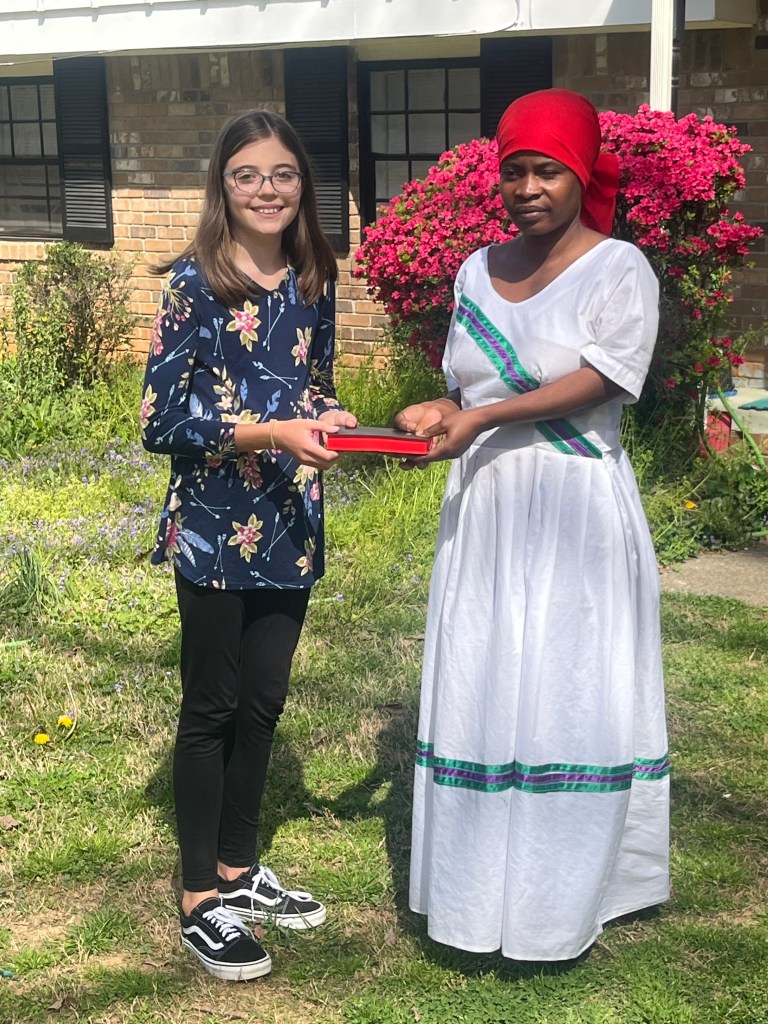
Their family now lives in a house. Imani and her two kids moved in to help take care of her mom. We counted at least 12 people living there! When we brought in some donated food, they were really happy. They asked my dad to come once a month to pray with them and bring them more food.
Imani’s mom couldn’t move one side of her face because of the stroke she had and so she had trouble talking. She was excited when she saw the Bible. She was rubbing her belly and saying that while we gave them food to eat, we also gave them spiritual food which they really needed too. She said that even though we are old friends, we gave them something new.
I’m glad I could help this family with food to eat and also spiritual food that they could get by reading their new Bible. I hope that God’s Word will help Imani’s family a lot by telling them the Good News about Jesus in their language.
-
Subscribe
Subscribed
Have a WordPress.com account? Log in now.

